
Morgan State University
Abstract
This project proposes a values-enacted strategic planning initiative led by a three-unit team within the Division of Academic Affairs at Morgan State University, the Center for Continuing and Professional Studies (CCPS), Morgan Online (MOL), and the Entrepreneurial Development Assistance Center (EDAC). Each of these units plays a distinct role in supporting adult and returning learners, online and hybrid education, non-credit and continuing education programs, and entrepreneurial development for students and community members. While our unit missions and daily operations differ, the populations we serve and the institutional challenges we navigate overlap in meaningful ways.
The team’s central goal is to engage in intentional, collaborative strategic planning that is explicitly grounded in the HuMetricsHSS framework and informed by values-based leadership. To date, much of the strategic work across our units has been shaped by compliance requirements, reporting structures, and short-term operational demands. This project represents a deliberate shift away from treating planning as a primarily technical exercise and toward understanding it as a leadership practice that reflects shared values, surfaces relational labor, and acknowledges forms of work that are essential to institutional success but often go unrecognized in traditional assessment systems.
Meet the Team
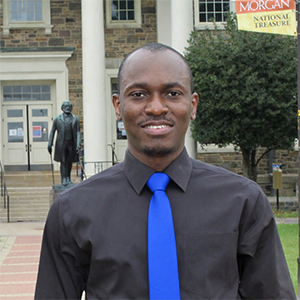
Dr. Adekunle Adejumo is a public health professional and program development specialist dedicated to expanding educational access and workforce readiness through innovative training and continuing education initiatives. At Morgan State University’s Center for Continuing and Professional Studies (CCPS), he contributes to the development and implementation of non-credit and professional development programs designed to serve adult learners, industry partners, and underserved communities. His work supports the full program development process, including needs assessment, instructional design, implementation, monitoring, and program evaluation to ensure training initiatives are relevant, outcomes-focused, and responsive to community needs.
Dr. Adejumo brings an interdisciplinary perspective to his work, informed by his background in veterinary medicine and public health. His professional interests include addressing social determinants of health and expanding opportunities for vulnerable populations, including refugees, orphans, and individuals impacted by the criminal justice system. He holds a Doctor of Veterinary Medicine (DVM) and a Master of Public Health (MPH).
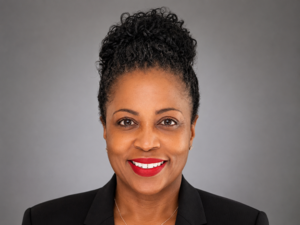
Dr. Patricia Williams Dockery serves as the Associate Vice President for Academic Affairs and Professor of Sociology and Anthropology at Morgan State University. She has conducted strategic planning, leadership, staff, and board development for non-profits and cultural institutions throughout the country.
Dr. Williams Dockery is a past Fulbright scholar at University of Málaga in Málaga, Spain. She earned a BA in English from Fisk University, a Master of Arts in Liberal Studies from Dartmouth College, and a PhD in Anthropology from University of Illinois at Chicago. Amongst her publications include Teaching Daughters of the Dust as a Womanist Text and the Black Arts Aesthetics of Filmmaker of Julie Dash (Peter Lang Publishers, 2020), The State of Racial Disparities in Charleston County, South Carolina 2000-2015 (as co-author), “A Voice in the Dark: Dr. Millicent E Brown-Race and Reality in Historic Charleston” in The Journal of Negro Education (2024), The South Carolina Black History Bugle ( as editor ), and Slavery and the African American Story which was published by Penguin Random House books for Young Readers in 2023. Penguin Random House will publish her forthcoming middle school books, Abolition and the African American Story ( December 2025) and Civil Rights and the African American Story (2026).
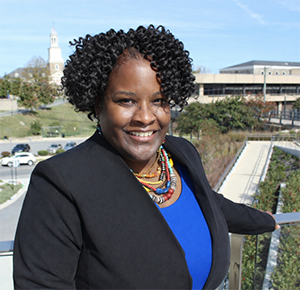
Dr. Nilajah Nyasuma Sims is the Executive Director of the Center for Continuing and Professional Studies (CCPS) at Morgan State University, where she leads initiatives that expand access to lifelong learning for adult and nontraditional students. She oversees a broad portfolio that includes scholarship programs funded by the Bernard Osher and Crankstart Foundations, the Improved Opportunities for Parents (IOP) program, Continuing Education Units (CEUs), professional development programming, and non-credit career training initiatives. Under her leadership, CCPS has expanded workforce training opportunities and strengthened partnerships that support student success and community impact.
Dr. Sims has secured significant funding to support adult learners and has led strategic initiatives that connect higher education with workforce development. She also serves in national leadership roles with Alpha Sigma Lambda Honor Society and contributes to advisory boards that support continuing education. Her work reflects a strong commitment to educational access, adult learner success, and the advancement of lifelong learning opportunities.
Dr. Sims earned her Ed.D. in Urban Educational Leadership with a concentration in Administration and Planning from Morgan State University and holds a Master of Human Services from Lincoln University.

Dr. Chad E. Smith is an instructional designer and educator with extensive experience in accessible course design, instructional technology, and faculty support in higher education. Over the past three decades, he has developed and taught undergraduate and graduate courses in online, hybrid, and face-to-face formats. His work emphasizes inclusive learning environments, particularly for deaf and hard-of-hearing students, and the effective integration of technology into teaching and learning.
Dr. Smith’s instructional design work includes developing courses aligned with Quality Matters standards, supporting faculty in the use of learning management systems, and incorporating emerging technologies to enhance student engagement. He has also led innovative initiatives such as a grant-funded Future Classroom Laboratory that explored robotics, coding, and collaborative technologies as tools for teaching and learning.
Through his scholarship and practice, Dr. Smith focuses on digital literacy, inclusive pedagogy, and the evolving role of technology in higher education.
VELI is generously supported by the Mellon Foundation and the William and Flora Hewlett Foundation.