Carnegie Mellon University, Languages, Cultures & Applied Linguistics
Abstract
Academics have been discussing the “crisis of the humanities” for over a century. The 2008 financial crisis, in particular, forced a harder turn towards “practical” majors, and as a result, enrollments and majors in the humanities and humanistic social sciences have been falling steadily. But the most recent attacks on the liberal arts have been pernicious, resulting in concrete, devastating administrative moves that will undoubtedly have long-term detrimental consequences. The assault on humanistic values disguised as thrifty cost-cutting measures has been felt most strongly in language programs and departments, which have been downsized, merged, and closed in institutions–public, private, selective, access-oriented–across the country. Carnegie Mellon University’s Department of Languages, Cultures & Applied Linguistics (LCAL) has been observing the national defunding of linguistics and cultural studies research and teaching with horror and with a resolute commitment to resist prevailing currents and to support our disciplines. To respond to daily financial, political, and institutional pressures and the constant onslaught of emergent issues, we welcome the opportunity to step back and take the time to reflect and develop a values-oriented framework for making decisions and developing initiatives that both respond to the present and prepare us for a stronger future.
Meet the Team
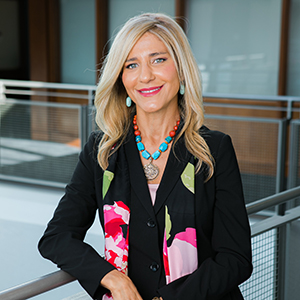
Nevine Abraham is Associate Teaching Professor of Arabic Studies. Her career is defined by a synergy between her scholarly research and commitment to transformative pedagogy. Her scholarship focuses on the intersection of literary-cultural studies, indigeneity, minoritization, and food studies. Her publications examine how historical and political forces, from imperialism to post-independence nationalism, shape marginalization across the Middle East and North Africa. As the co-author of an interactive documentary on Palestinian and Israeli Food Cultures, and of two Online Arabic Curricula for the Open Learning Initiative, she has used experiential learning and technology to make learning accessible and equitable, and anchor linguistic acquisition in sociocultural frameworks. Her forthcoming project centers on Bethlehemite women as storytellers and custodians of native culture, utilizing digitized heritage objects to preserve ancestral narratives.
Anne Lambright is Paul Mellon Distinguished Professor of Hispanic Studies and Head of Languages, Cultures & Applied Linguistics at Carnegie Mellon University. A Citizen of the Chickasaw Nation, her scholarship centers on Indigenous studies, human rights studies, and Andean literature and cultures. Her published works include Creating the Hybrid Intellectual: Subject, Space, and the Feminine in the Narrative of José María Arguedas (Bucknell UP, 2007); Andean Truths: Transitional Justice, Ethnicity, and Cultural Production in Post-Shining Path Peru (Liverpool UP, 2015), and Yuyachkani’s Human Rights Theater: Five Plays / Yuyachkani y el teatro de los derechos humanos: Cinco obras (MLA Texts and Translation Series, 2025).
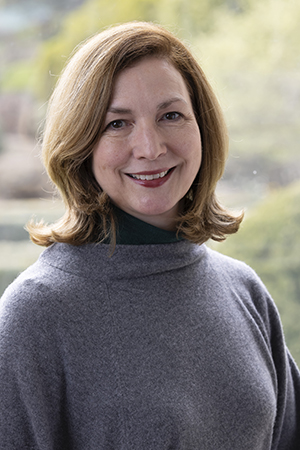

Therese Tardio is a Teaching Professor of Hispanic Studies and Director of the Humanities Scholars Program at Carnegie Mellon University in Pittsburgh, Pennsylvania. Her research interests focus on gender-based violence in Central America. She is the co-author and lead content developer of Elementary Spanish I & II Online, a web-based course that provides open-access via the Open Learning Initiative. Her research incorporates different geographic areas in the Spanish-speaking world, namely Central American – with a focus on contemporary cultural production from El Salvador and Nicaragua and the U.S.-Mexico Borderlands. While diverse areas, her focus is shaped by feminist and gender studies, decolonial studies and visual studies. One of her primary commitments as an educator is to challenge students to think critically and analytically, not only about the subject matter, but about themselves and their relationships to the world.
Rémi A. van Compernolle (Adam van Compernolle) is an aging marathoner and cyclist who moonlights as a Professor of Second Language Acquisition and French and Francophone Studies at Carnegie Mellon University, where he also serves as the Associate Head of the Department of Languages, Cultures & Applied Linguistics. In this capacity, is work focuses on the intersections between cognition, affect and identity in second/foreign/additional language development. Drawing on Vygotskian cultural-historical psychology, he examines how opportunities for development are co-constructed between people (e.g., teachers and students) and how cultural artifacts (e.g., linguistic forms, semantic and pragmatic concepts) are internalized and, in turn, mediate cognition, affect and identity performance.


Seth Wiener is an Associate Professor of Second Language Acquisition and Chinese Studies at Carnegie Mellon University and the Director of Graduate Studies for the Ph.D. program in Applied Linguistics and Second Language Acquisition. He founded and directs the Language Acquisition, Processing, and Pedagogy (LAPP) Lab, in which graduate and undergraduate students help carry out experimental linguistics research. The LAPP Lab also aims to develop real-world pedagogical innovations for language instructors and learners. At CMU, Dr. Wiener teaches a variety of courses on second language acquisition, Chinese language, and research methods. He is also an Associate Editor for the journal “Language Learning.”